


Are There Earthquakes in the Dominican Republic?
Earthquakes do happen in the Dominican Republic - the island of Hispaniola sits on the boundary between the North American and Caribbean tectonic plates. Almost all of them, however, are picked up only by instruments: the last damaging earthquake in the country was more than twenty years ago. This article covers how the island’s tectonics work, what a century of records shows, and what to do if you ever feel a tremor.
Why the Dominican Republic has earthquakes
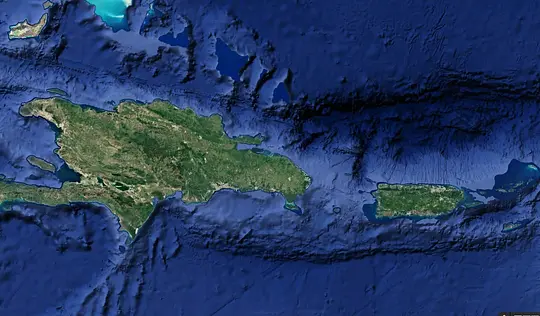
GPS measurements show the Caribbean plate moving about 19-20 millimetres per year relative to the North American plate. The motion is not smooth: rock along the boundary accumulates strain for years or decades, then releases it in earthquakes. It is the same mechanism as in California or Japan - but the plates here move several times slower, so far less energy builds up.
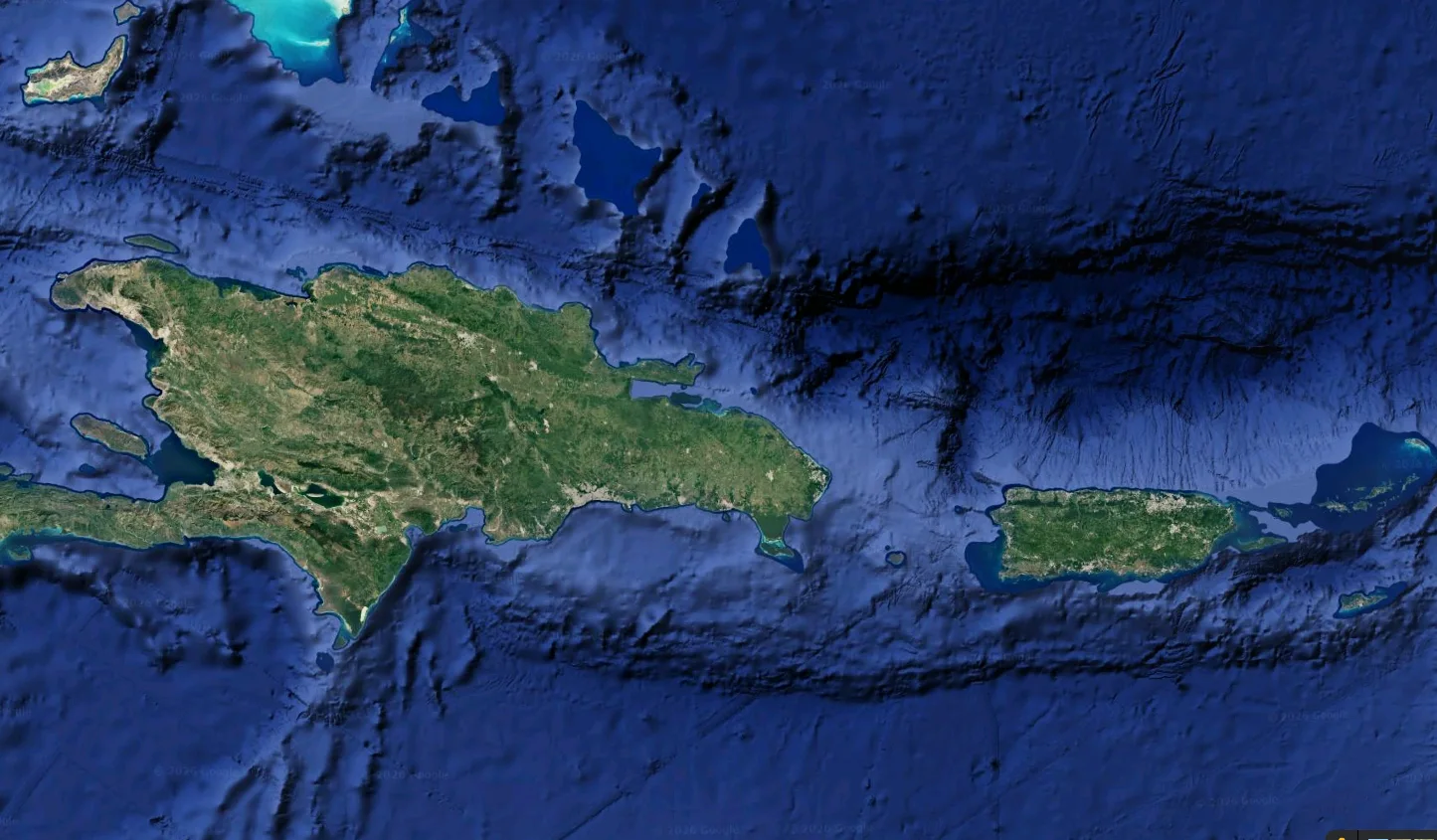
Three main structures matter:
The Septentrional Fault runs along the north of the island through the Cibao Valley - south of Puerto Plata, past Santiago, towards the Samaná peninsula. It is a strike-slip fault of the same type as the San Andreas. According to USGS field studies, it slips at 6-9 mm per year, and its last major rupture happened about 800 years ago - geologists established this from offset river channels and dated sediments. Major events on this fault are separated by many centuries.
The Enriquillo Fault runs along the south of the island, mostly through Haiti, only clipping the sparsely populated southwest of the Dominican Republic.
The Puerto Rico Trench is a deep-water zone north of the island where the North American plate dives beneath the Caribbean plate. The strongest earthquakes in the region’s history are linked to it.
How often earthquakes happen in the Dominican Republic
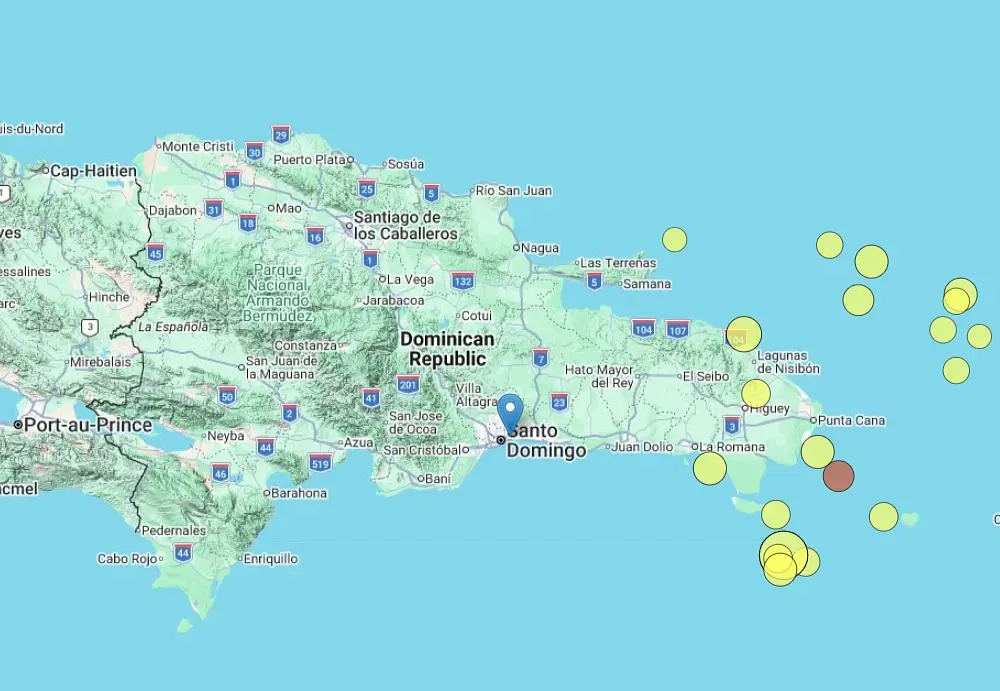
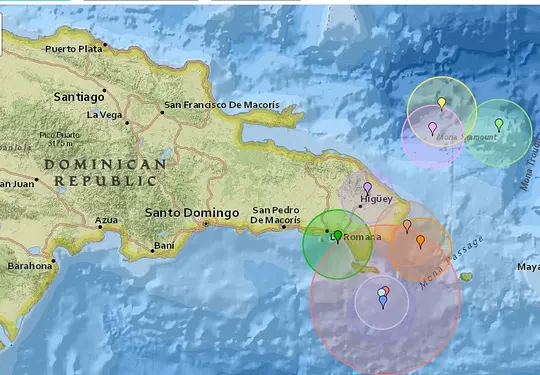
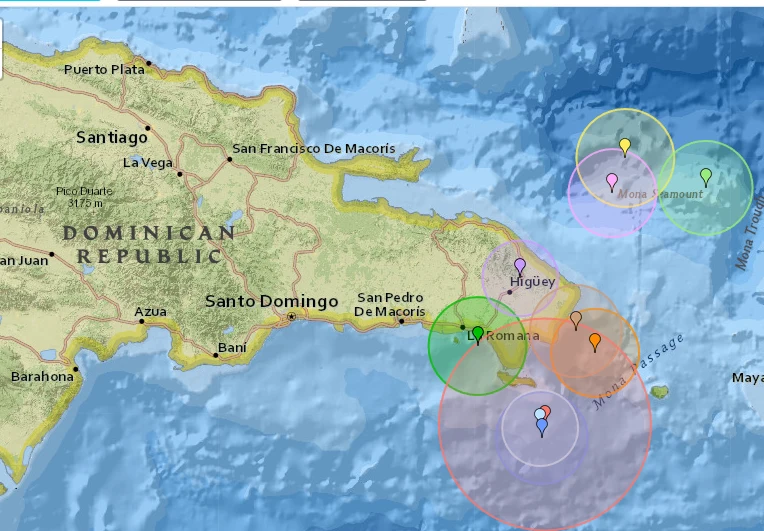
Seismographs record dozens of magnitude 4+ events within 300 km of the Dominican Republic every year. Nearly all of them occur at depth or under the seabed - nobody feels them at the surface. A tremor you can actually feel in a town or a hotel comes along once every few years, and it usually amounts to rattling dishes.
A magnitude 6+ earthquake occurs in the country roughly once every 15-20 years. Magnitude 7+ events - over more than a century of instrumental records, there have been only a handful. A two-week holiday will, with near certainty, pass without a single noticeable tremor - most locals can recall only one or two such moments in their entire lives.
Major earthquakes in the country’s history
The strongest earthquake in the instrumental history of the entire Caribbean happened right here: on August 4, 1946, magnitude 7.8, with an epicentre off the northeastern coast near Samaná. It triggered a tsunami on a limited stretch of the northeastern shore. In 1953 a noticeable earthquake struck near Puerto Plata, and in 2003 the city was shaken again - magnitude 6.5, with damage to some older buildings.
An analysis of 500 years of historical records for Hispaniola shows that strong events on the island are separated by decades - and on individual faults, by centuries. There has been no destructive earthquake in the Dominican Republic since 2003.
Are hotels in the Dominican Republic earthquake-safe
The Dominican Republic has a national seismic building code, and resort complexes in the tourist zones are designed for seismic loads. The typical resort format works in your favour too: low-rise buildings of 2-4 floors handle shaking better than high-rises. In a building like that, a weak earthquake is more likely to register as a phone alert than as a sensation.
What to do during an earthquake
The rules are standard for any seismic zone:
- A tremor usually lasts seconds. Don’t run - during strong shaking it is safer to stay where you are.
- Indoors: move away from windows and glass partitions, crouch next to sturdy furniture, protect your head.
- Don’t use the elevator.
- Once the shaking stops, go to an open area away from building facades and power lines.
- On the beach, after a strong and long tremor, move away from the water to higher ground. This is a standard precaution on any coastline.
Hotel staff in the tourist zones are trained for these situations - if anything happens, follow their instructions.
Is the Dominican Republic safe from earthquakes?
Hispaniola is a seismically active island, and there is no point hiding it: the faults are described in the scientific literature and the history is well documented. But the frequency speaks for itself: noticeable tremors once every few years, strong earthquakes once in decades. This factor should not affect your travel plans.

Planning a trip to the Dominican Republic and have questions - message us on WhatsApp +1-849-506-0202, we answer from right here on the ground.