

Sargassum in the Dominican Republic in 2026

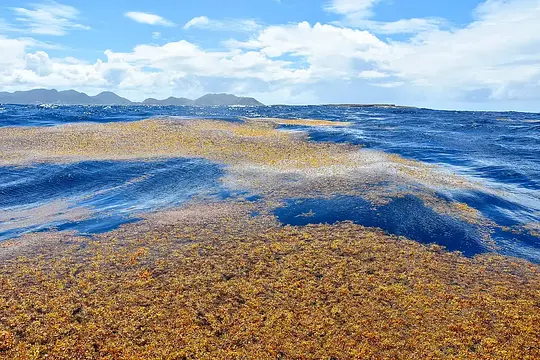
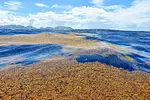
A July morning in the Dominican Republic. In Bavaro, a tractor crawls along the beach, raking up the brown piles washed in overnight. That same hour, three hundred kilometers to the northwest in Sosua, divers are heading out to the reef - underwater visibility is twenty meters. One island, one sea, one and the same day. The entire difference is which way the shore faces.
Let’s take a calm look at how this phenomenon works - which months and beaches take the hit, what the science says - and how to plan a vacation that ends up on the second beach, not the first.
What is that stuff on the beach
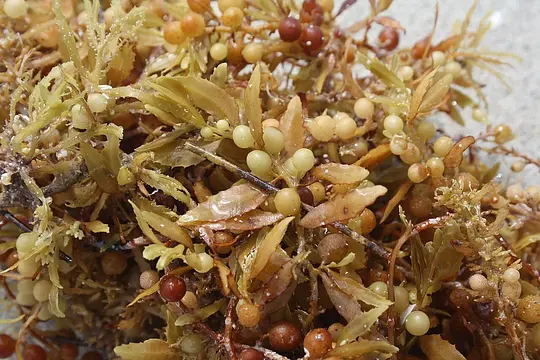
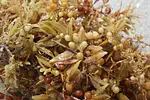
It’s sargassum - a brown seaweed that never grows on the seafloor. It spends its whole life drifting across the ocean, kept afloat by tiny air bladders that look like grapes. That’s actually where the name comes from: Portuguese sailors in Columbus’s time called it sargaço, after a grape-like plant. The Sargasso Sea was on their charts before America was on most globes.
Out in the open ocean, these floating mats aren’t trash - they’re an entire ecosystem where baby fish, crabs and young sea turtles hide from predators. The trouble starts when currents push the seaweed ashore. Baking in the sun, it starts to rot and releases that infamous hydrogen sulfide smell - rotten eggs. The seaweed itself is harmless: not toxic, doesn’t sting, perfectly fine to touch in the water. One caveat - if you have asthma, don’t sit right next to large rotting piles. It’s the smell that’s the issue, not the plant.
And one thing worth understanding right away: sargassum is a shoreline problem. Two hundred meters out, the ocean is exactly as clear and turquoise as the brochure photos. That’s why catamarans and snorkeling trips run as usual even in the worst seaweed month.
Why there’s so much of it now - and what scientists say
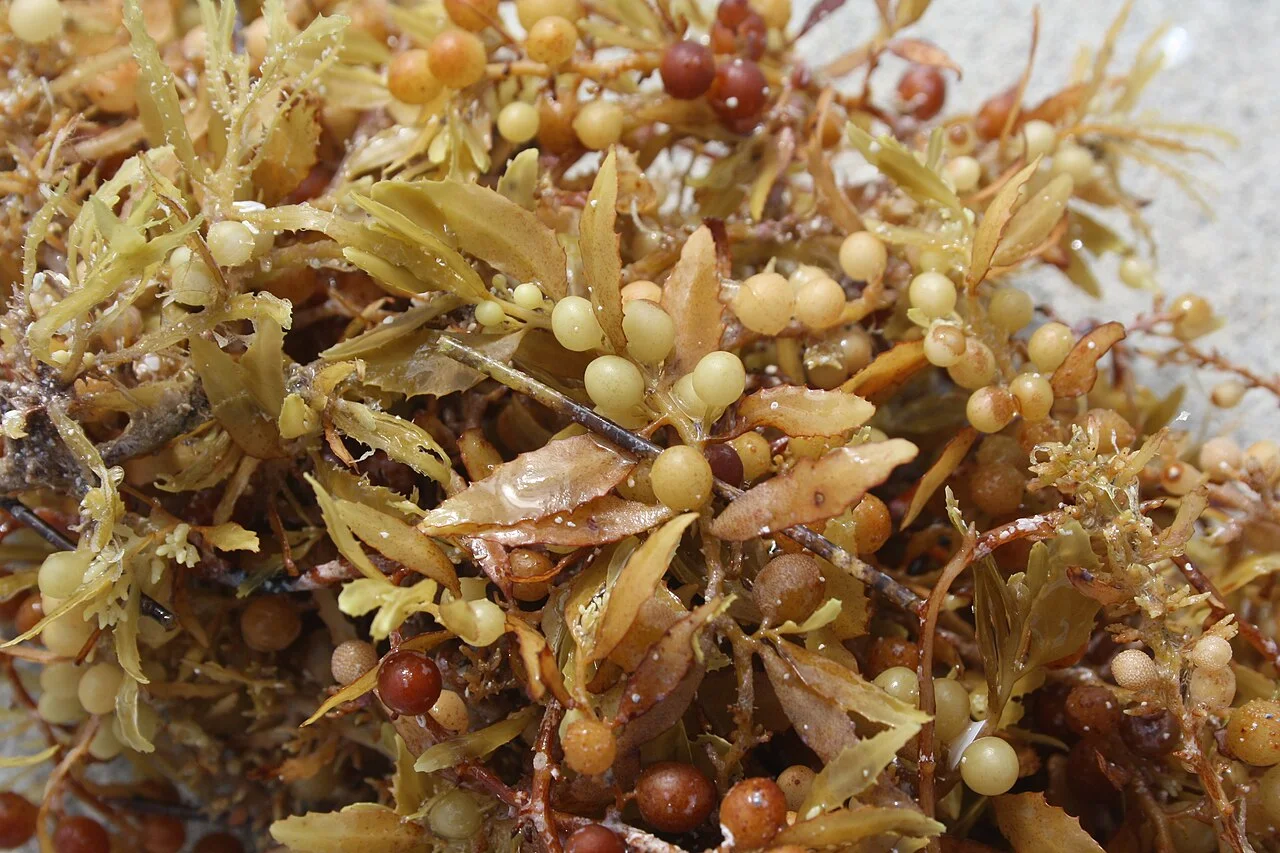
Before 2008, major seaweed landings in the Caribbean were practically unheard of. Then in 2011, satellites first captured what scientists later named the Great Atlantic Sargassum Belt - a band of seaweed stretching from the coast of West Africa to the Gulf of Mexico. The belt has formed almost every year since (it skipped only 2013), and it keeps growing: in May 2025 its biomass hit a record 37.5 million tons (review in the journal Harmful Algae, via ScienceDaily).
Oceanographers at the University of South Florida, who track the belt by satellite, put it bluntly: according to professor Chuanmin Hu, the ocean appears to be shifting from a macroalgae-poor state to a macroalgae-rich one (WUSF). One of the causes is surprising: the Amazon droughts of 2023-2024 let nitrogen and phosphorus build up in the river basin, and when heavy rains finally flushed it all into the Atlantic, the seaweed got a massive dose of fertilizer (ABC News).
As for 2026: USF’s December report recorded an unusual winter surge - more seaweed in the eastern Caribbean than ever seen at that time of year (St. Thomas Source), and the May bulletin says it plainly: 2026 will be a major year and may break the record by summer (USF Sargassum Watch System).
Sounds alarming. But what those global tonnes mean for your specific vacation depends entirely on which coast of the Dominican Republic you’re flying to.
The calendar: when the east coast gets hit
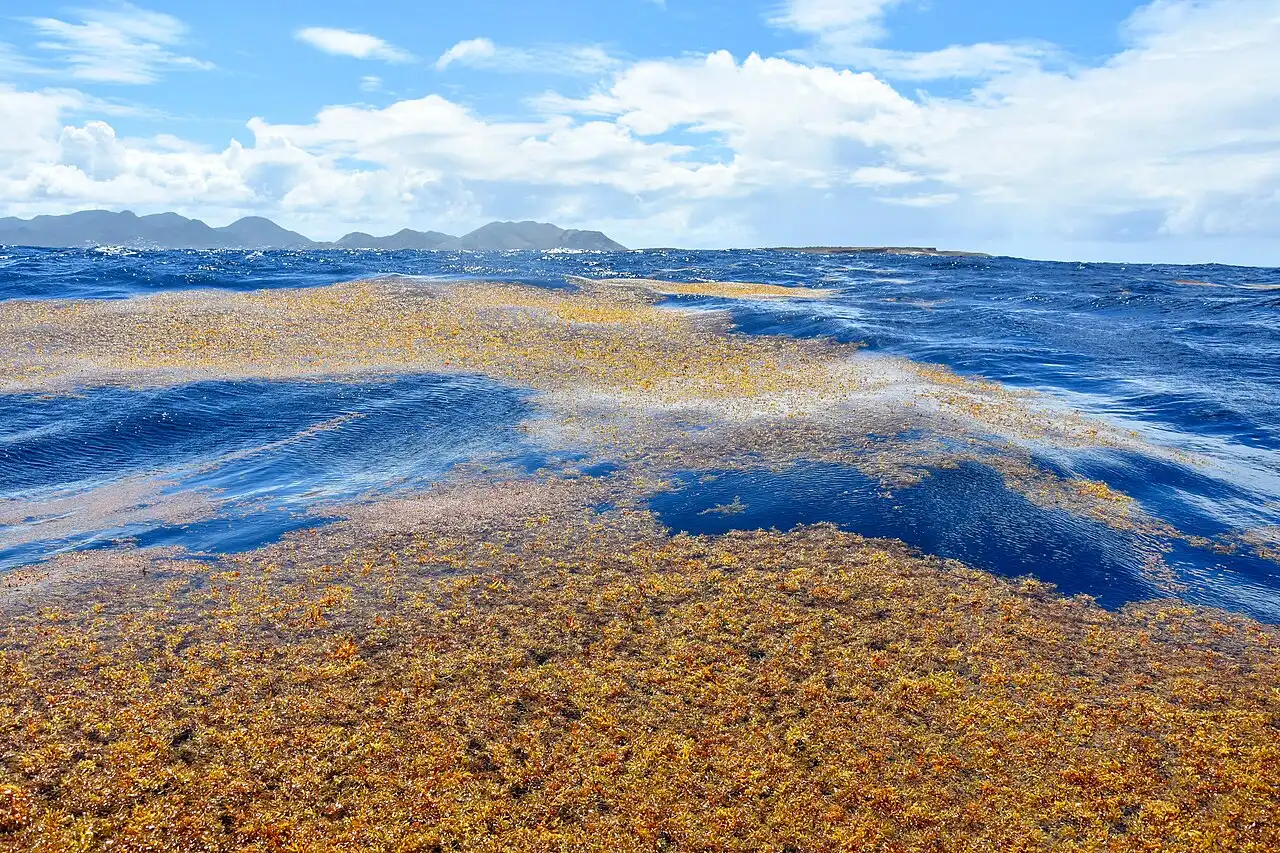
This is about Punta Cana, Bavaro and Uvero Alto - where most tourists land and where all the scary photos come from.
| Month | Conditions |
|---|---|
| January - February | Clean. Best beach months |
| March | First landings possible |
| April - May | Seaweed builds up, especially in Bavaro |
| June - August | Peak season. Hotels clean the beaches every morning |
| September - October | Tapering off |
| November - December | Clean, beaches recover |
Within Punta Cana itself, beaches behave very differently. Bavaro gets it worst - it faces due east, straight into the current. Cap Cana and Juanillo are shielded by a reef and stay noticeably cleaner. Macao is an open ocean beach, and the current carries seaweed away faster than it can pile up. If you’re planning from scratch and want to line up a clean beach with weather and prices, we have a separate season-by-season guide.
The north coast: where seaweed is something you read about in the news
Now for the part no “seaweed in Punta Cana” article will tell you - because their authors sell tours in Punta Cana.
Puerto Plata, Sosua, Cabarete and the entire north coast of the Dominican Republic sit outside the sargassum belt’s path. That’s not marketing, it’s geography: the bulk of the seaweed drifts in from the east, from the equatorial Atlantic, and the currents push it onto the eastern and southeastern shores of the Caribbean. The island’s north coast faces this flow sideways - and even in the record years of 2025-2026, it stays clean.
That picture from the top of this article - the tractor in Bavaro and the divers in Sosua - isn’t poetic license, it’s an ordinary July day. Even at the peak of the landing season, Sosua bay remains one of the country’s top spots for diving. Playa Dorada, Playa Alicios, the beaches of Cabarete - kitesurfers fly in from all over the world, and they’re definitely not coming to smell hydrogen sulfide.
So if you’re choosing a destination for summer 2026 and don’t feel like gambling on forecasts - just fly north. The problem disappears at the ticket-buying stage. Our guide to the best beaches in the Dominican Republic will help you compare coasts.
If your Punta Cana tickets are already booked
Also fine - no need to cancel anything. A few things that actually work.
Beachfront hotels clean their shoreline at dawn; by nine or ten in the morning the beach is usually in order. After a heavy landing, big resorts have lagoon pools and buoyed-off swimming zones. Don’t count on compensation though: legally, seaweed is a natural phenomenon like rain, and hotels don’t refund a “ruined beach” - which is why you pick your coast wisely before booking instead of arguing with the front desk after.
You can swim even during a landing, by the way. Only the strip right at the waterline is unpleasant - beyond it the water is normal, and often walking a hundred meters along the beach gets you to a clear stretch.
But the best move during a landing is simply to head out to sea. The seaweed sits on the shore, not in the ocean: a catamaran to Saona, snorkeling at the reef, a boat trip - and you spend the whole day in exactly the clear water you flew here for. On the way you might pass a drifting mat - it looks more curious than scary - but the captains know these waters and pick clean swimming spots. There’s plenty to choose from in our excursions catalog.
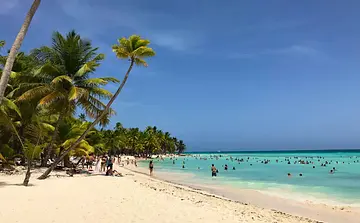
And you can always escape north for a day or two - the Damajagua waterfalls, and beaches without a single strand of seaweed as a bonus.
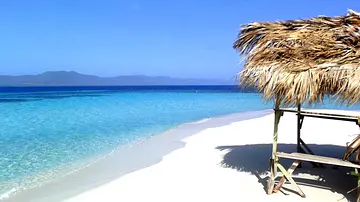
If you’d rather track conditions yourself, the University of South Florida publishes monthly satellite bulletins via its Sargassum Watch System. Or just message us: we’re here on the ground and see the beaches with our own eyes, not from orbit.
Flying to the Dominican Republic in 2026? Message us - we’ll tell you where the water is clear right now and help you pick an excursion: WhatsApp +1 (849) 506-0202