

Best Beaches in the Dominican Republic
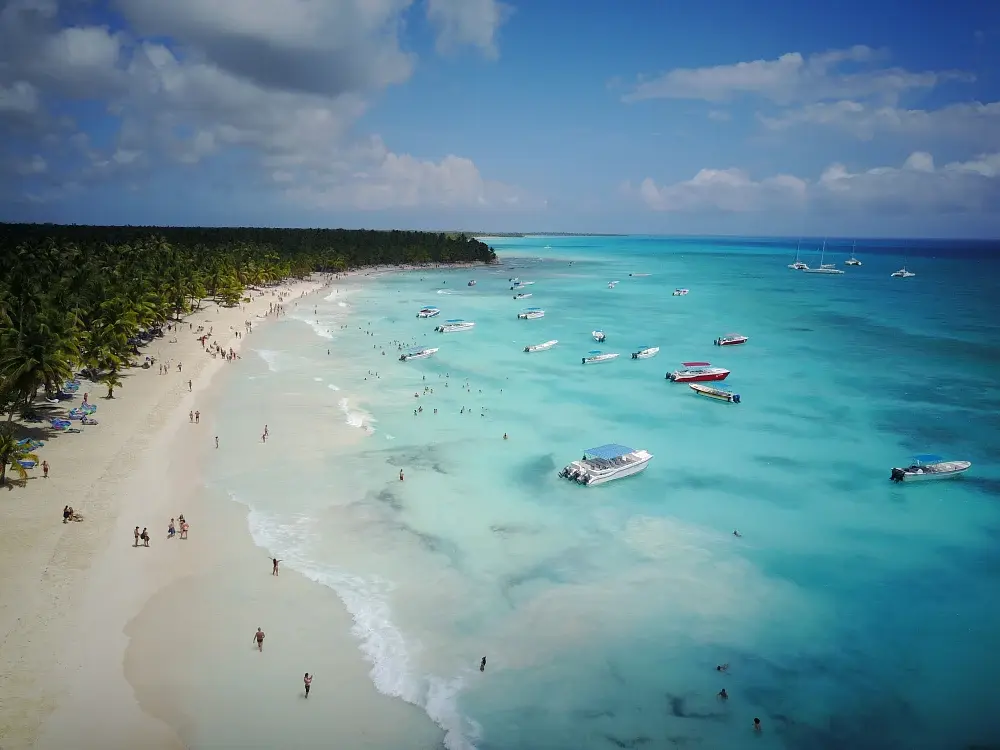
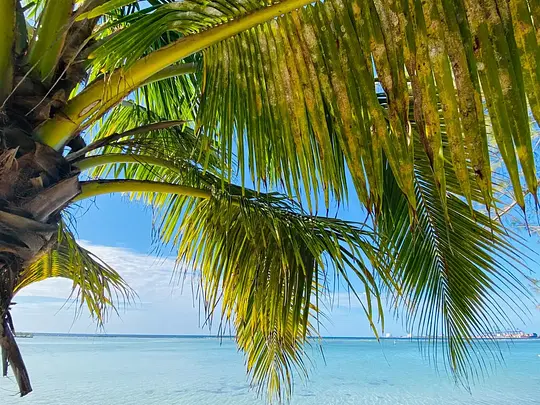
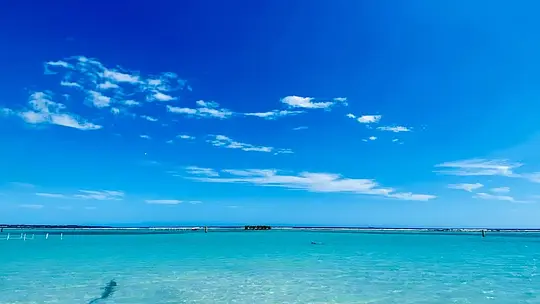
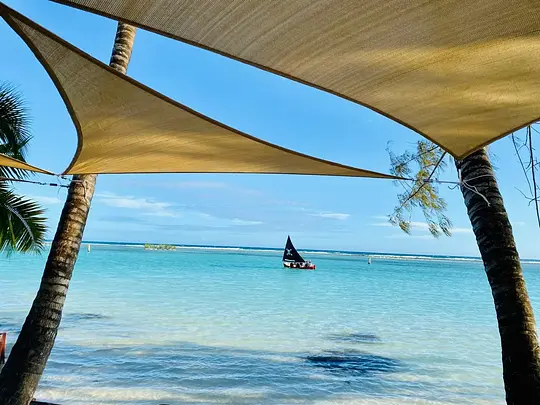
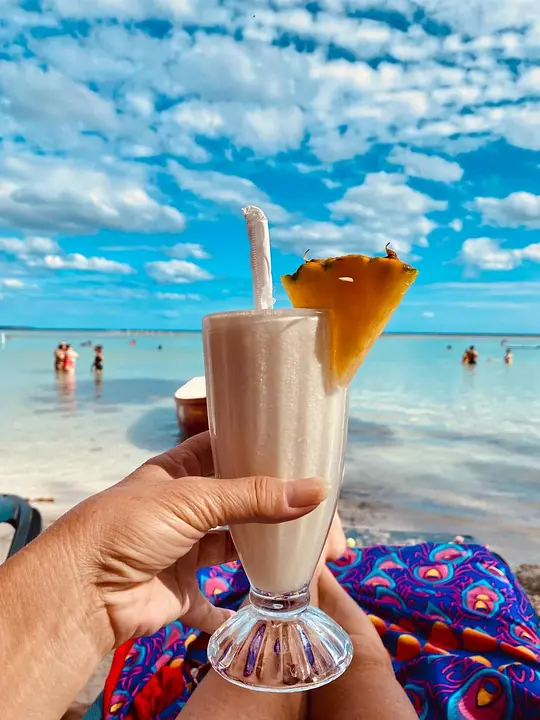
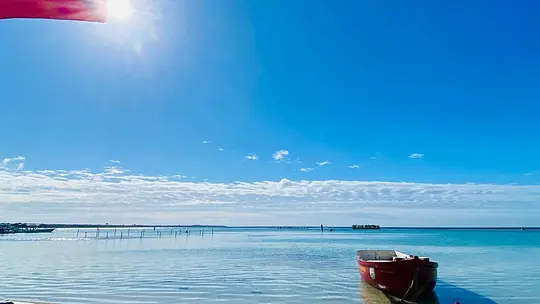
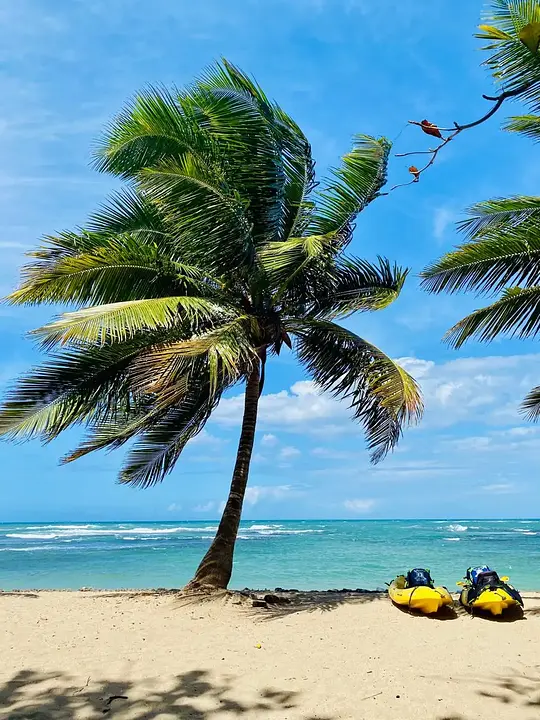
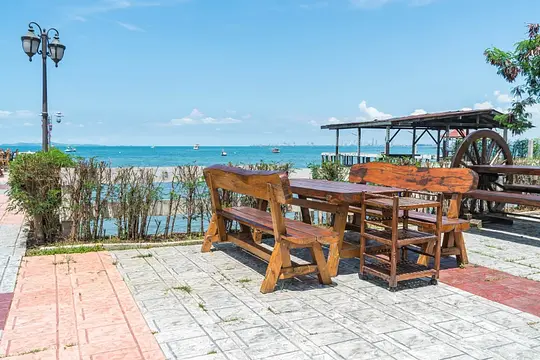
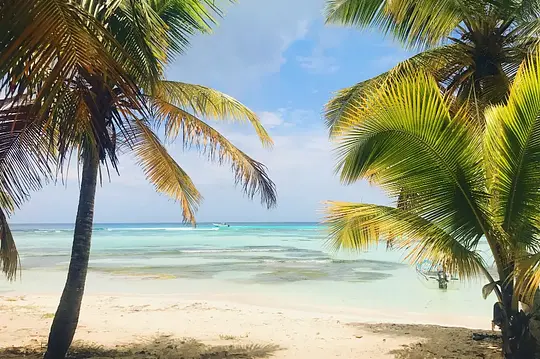
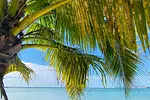
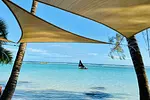
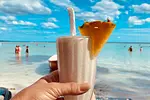
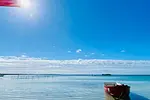
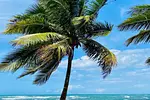
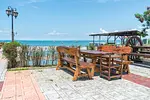
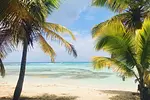
The Dominican Republic has roughly 1,600 km of coastline, two different coasts - the Atlantic and the Caribbean, and more beaches than you could visit in a month of trying. Some have DJ booths and cocktail service. Others don’t have a road.
This is not a ranking. A surfer and a family with toddlers will never agree on the same beach. Instead - a coast-by-coast breakdown of what each beach actually looks like when you show up: what’s on the sand, what’s in the water, and whether you can get a cold Presidente without walking a kilometer.
We live and operate on the North Coast, so that’s where the detail runs deepest. But we’ve covered the whole island.
Puerto Plata Province
The Atlantic side. The water is a shade darker than the Caribbean, the waves have more personality, and the coastline alternates between golden sand bays and rocky headlands with reef systems just offshore. Puerto Plata, Sosua, and Cabarete sit within 30 minutes of each other - three towns, three different beach cultures.
Playa Dorada
The beach that started North Coast tourism in the 1980s. A long strip of golden sand backed by all-inclusive resorts and a golf course. The water is warm, the waves are gentle enough for kids, and you can rent anything from a sun lounger to a parasailing harness without leaving the sand. Not secluded and not trying to be.
Sosua Beach
A horseshoe bay with golden sand, sheltered water, and a coral reef right off the shore - one of the best snorkeling spots on the entire North Coast. The beach sits below Sosua town, accessible through a walkway lined with shops and restaurants serving everything from Dominican fried fish to German schnitzel (the town’s history includes a 1940s Jewish refugee community, and the European influence stuck around).
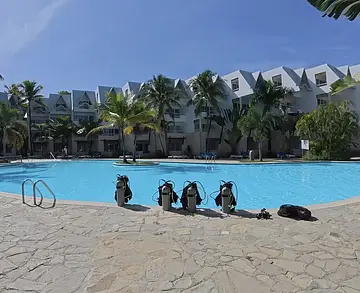
The water is shallow and clear enough to see the bottom from the sand. Dive centers operate from the area above the beach - this is where most scuba diving on the North Coast happens, including reef dives, night dives, and the famous La Zingara wreck at 36 meters.
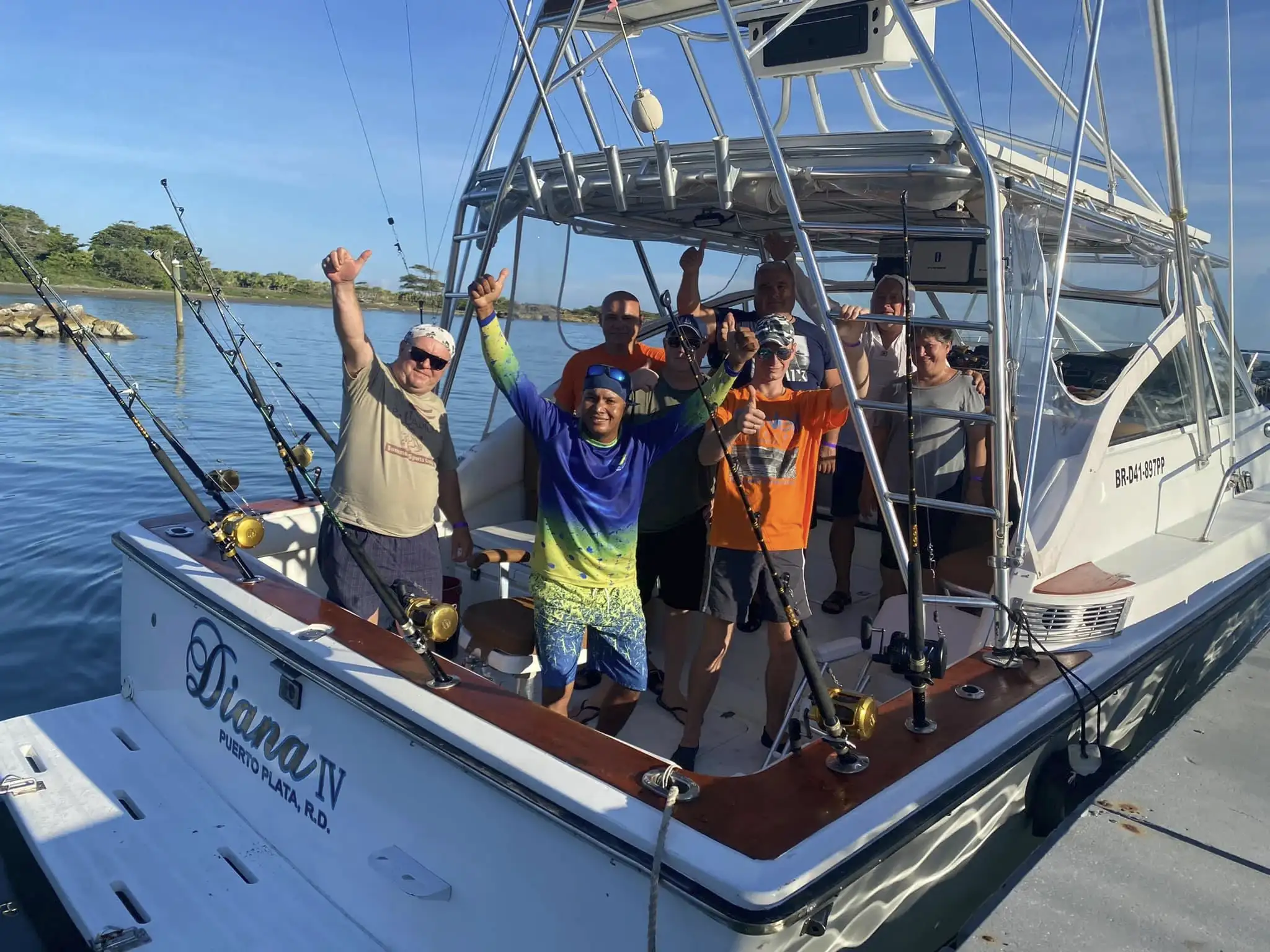
Boat operators along the sand also run fishing trips into the Atlantic for mahi-mahi, tuna, and marlin.
On weekends, Dominican families fill the beach. Weekdays are quieter. Either way, the restaurants behind the sand serve some of the freshest seafood on the coast.
Playa Rogelio
East of Cabarete, past the tourist belt, a 2.7-kilometer stretch of sand that most travel guides skip entirely. That’s the appeal. The water here is some of the cleanest on the North Coast - clear and calm without the boat traffic of busier bays. Playa Rogelio has basic amenities - a beach bar, loungers, umbrellas, lifeguards on duty - but none of the crowds or vendor pressure you’ll find at the more famous spots. The descent to the water is gradual, the sand is light, and the setting is green hills meeting Atlantic blue. It’s the kind of beach locals go to when they want a quiet afternoon, not a production.
Cabarete Beach
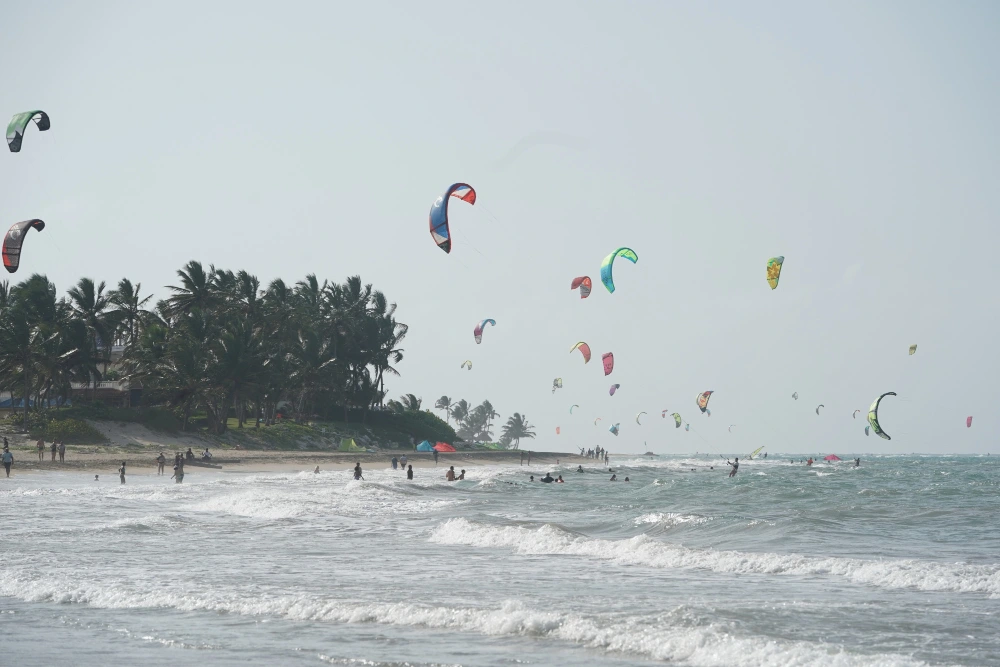
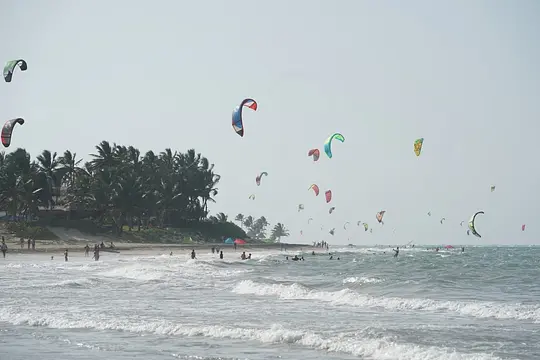
This is where the wind lives. One of the top kitesurfing and windsurfing destinations on the planet - the trade winds blow consistently, the bay funnels them, and kites fill the sky from mid-morning until sunset.
But even if you don’t kitesurf, Cabarete works. The food scene is the best on the North Coast. Walk the beach strip and you’ll pass Dominican, Italian, French, sushi, and wood-fired pizza without repeating a cuisine. Beachfront bars sit directly on the sand, many with tables where your feet are literally in it.
Playa Encuentro
Between Sosua and Cabarete. The surf spot. A right-hand reef break for intermediate and advanced surfers, with forgiving sections for beginners taking lessons. No resorts, just surf schools and low-key energy. Bring water shoes - the beach is rocky in places.
Playa Bergantin
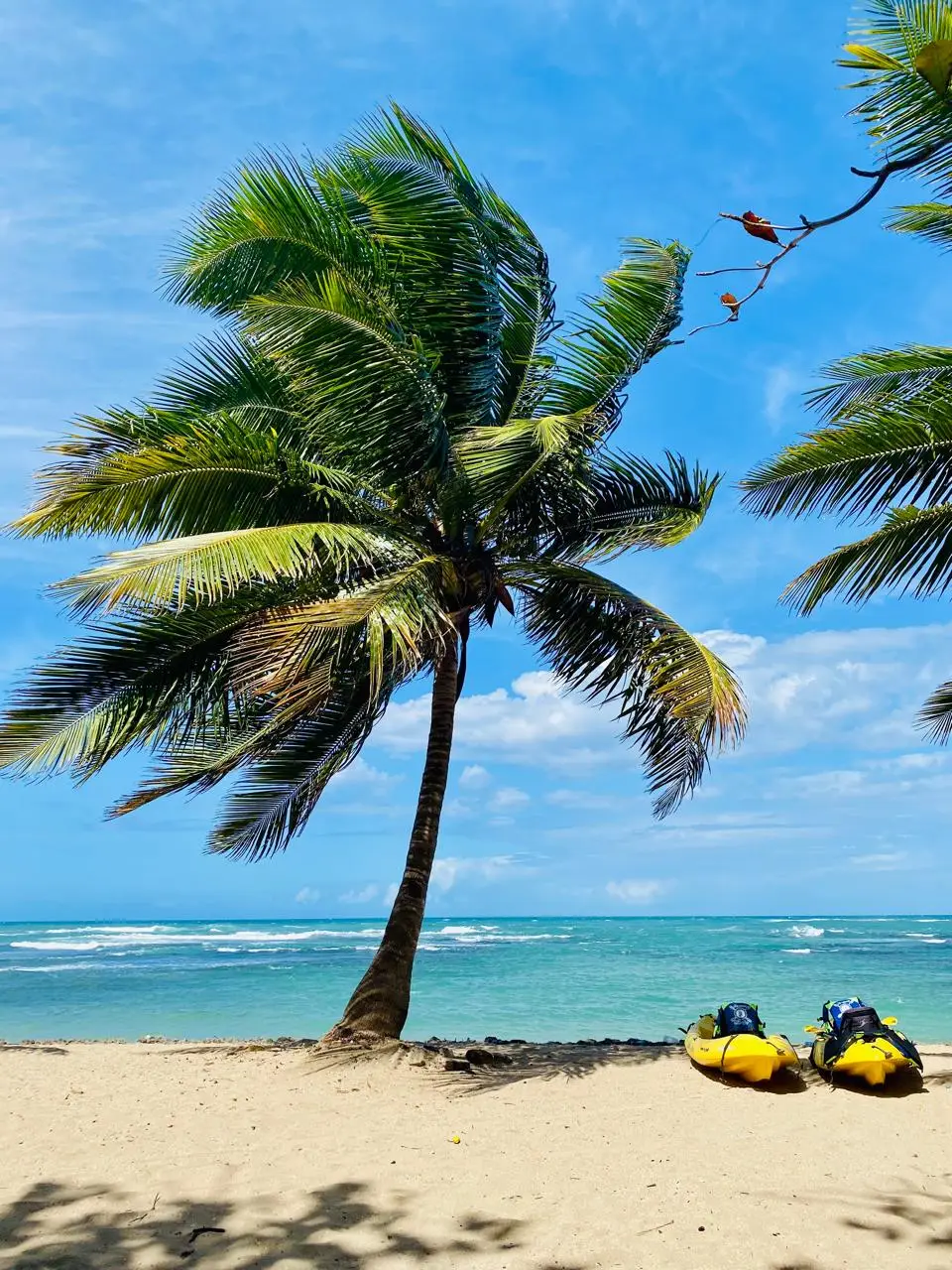
East of Playa Dorada. Quiet, undeveloped, gorgeous. No beach bars, no vendors. Just sand, trees, and water. The kind of beach where you might be the only group there on a Tuesday morning.
Cayo Arena (Paradise Island)
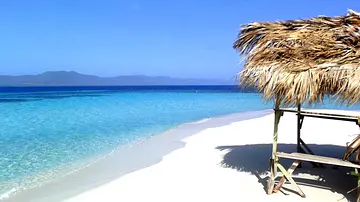
A tiny sandbar surrounded by coral reef, sitting in the ocean off the northwest coast near Punta Rucia. You get there by boat, snorkel in water so clear it barely looks real, and head back. No buildings, no pavement - just sand and reef and fish.
This is the Isla Bonita experience - a full-day trip with boat ride, snorkeling, beach lunch, and tropical drinks. The VIP catamaran version adds champagne and a larger boat.
The Samana Peninsula
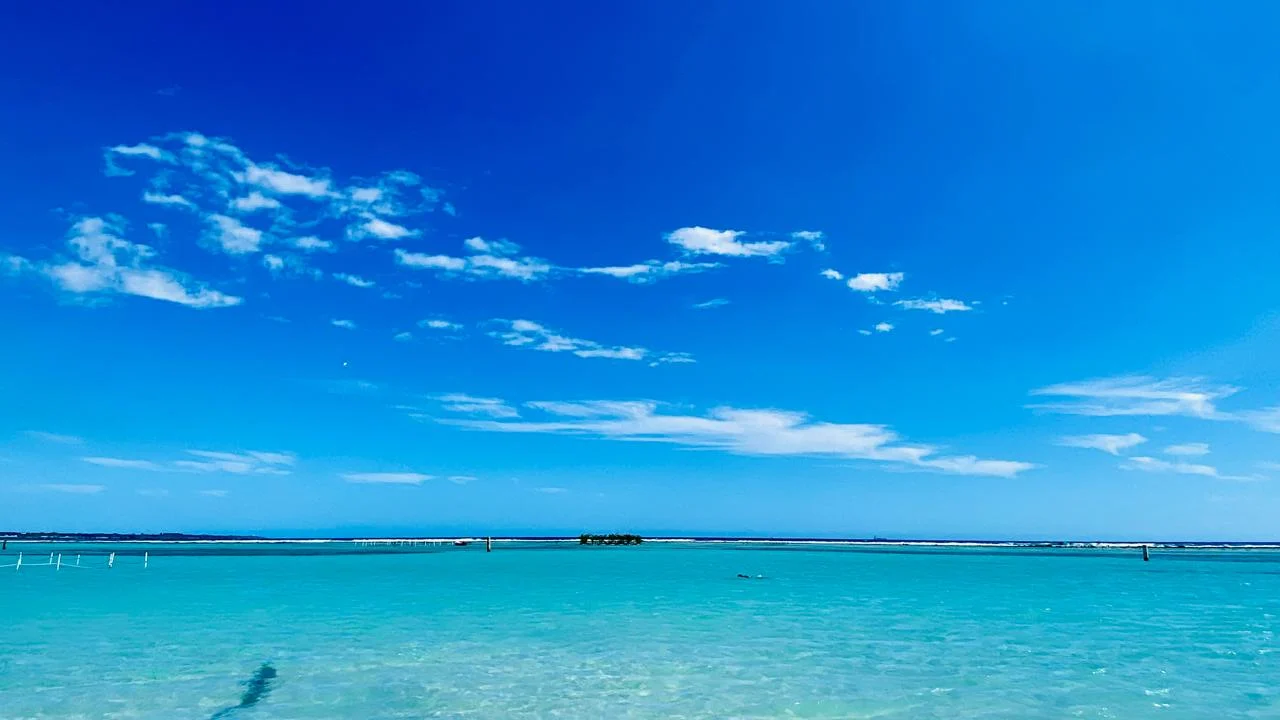
If the North Coast is adventure, Samana is escape. Less infrastructure, more coconut palms, and the kind of beaches that make photographers weep.
Playa Rincon routinely shows up in “best beaches in the world” lists, and the hype matches reality. A long crescent of white sand backed by green hills, with a freshwater river meeting the ocean at one end. A few vendors sell fried fish and coconuts. No loungers, no music, no resorts.
Las Terrenas is the most developed spot on the peninsula. French and Italian expats settled here decades ago - the result is a beach town with surprisingly good restaurants and a European cafe culture layered over Dominican reality.
Cayo Levantado (Bacardi Island) - the small island in Samana Bay made famous by the rum ad. White sand, clear water, palm trees. From January through March, you might spot humpback whales in the bay on the boat ride over.
Punta Cana and the East Coast
Where the majority of Dominican tourism happens. Long stretches of white sand, calm water, and rows of all-inclusive resorts running for kilometers.
Bavaro Beach is the flagship. Miles of white sand, warm turquoise water, everything within arm’s reach. One downside: sargassum seaweed can pile up between March and August. Resorts clean it daily, but some months are worse.
Macao Beach sits northeast of Bavaro. Wider, rawer, bigger waves. Local restaurants on the sand sell grilled fish at prices that would make Bavaro blush.
Juanillo Beach (Cap Cana) is the luxury end. Calm water, white sand, resort cabanas. Photographs like a screensaver.
The South Coast and Beyond
Bayahibe - a fishing-village beach with turquoise water and Blue Flag certification. Gateway to Isla Saona, where the sand is white, the water is shallow, and sea stars are visible from the surface. Gets packed after 11 AM when day-trip boats arrive.
Bahia de las Aguilas - eight kilometers of white sand with nobody on it. No vendors, no buildings, nothing. Consistently called the most beautiful beach in the Dominican Republic by people who’ve been to all the others. You reach it by boat or a long drive. For now, it remains wild.
What to Do Between Beaches
If you’re on the North Coast, the beach is just the starting point. Between swims there are the Damajagua waterfalls to jump into, jungle ziplines, horseback rides along the coast, and deep sea fishing offshore.
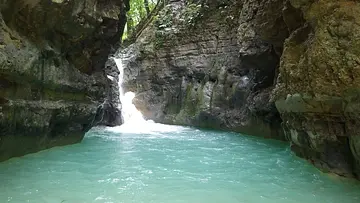
Arriving by cruise ship at Amber Cove or Taino Bay? You have 8-9 hours on shore - enough for a beach visit plus a combo adventure. We covered the full port day in the Amber Cove cruise guide.
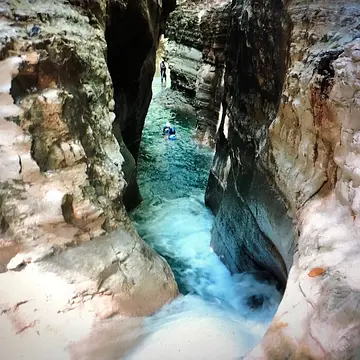
First time in the DR? Start with our first-timer’s guide. Wondering what to eat after a swim? The Dominican food guide has you covered. Traveling with kids? That too.
One practical note: all beaches in the Dominican Republic are public by law. Even if a resort sits on the sand, you can walk any beach in the country. And pack water shoes - the coral and volcanic rock coastline can be sharp. Your feet will thank you.
Planning your beach days on the North Coast? Browse all tours and excursions or drop us a message on WhatsApp - we’ll help you build the itinerary around the beaches, not the other way around.