


Dominican Republic Wild Nature (Part 1)
You didn’t come to the Dominican Republic for birdwatching. But you’ll notice the birds anyway.
A tiny emerald flash on a branch at eye level, smaller than your fist, staring back like it owns the rainforest. Hummingbirds moving so fast between flowers you question whether they’re real. Pelicans cannonballing into the surf from way up.
Dominican wildlife isn’t locked behind zoo fences. It’s right there - on low branches, in mountain gardens, diving into waves.
This is Part 1: birds. The ones you’ll actually see on excursions, not the ones that need binoculars and dawn jungle treks.
La Cigua Palmera - The National Bird

Palmchat in English, and the national bird of the Dominican Republic.
Here’s what makes it special: it exists nowhere else on Earth except Hispaniola. Not just rare - endemic. The Palmchat is the only species in its entire bird family, one that evolved exclusively on this island. One species, one family, one place. When you see one, you’re looking at evolution that happened right here and nowhere else.

Looks like: a robin-sized bird, brown-olive with a streaked chest, traveling in noisy groups.
Does this: eats palm berries, spreads seeds, and builds massive communal nests in royal palms - apartment buildings for birds, where each pair keeps its own chamber. Nests last for years and are sometimes shared with other species.
Nesting: each clutch has 2-4 eggs. They’re ecosystem engineers disguised as chatty brown birds.
The palm forest on Mount Isabel de Torres is full of them - watch for their big stick nests high in the palms. If you’re planning your first Dominican trip, those conspicuous nests are Cigua Palmera territory.
It’s a Least Concern species and still common and widespread, though palm cutting removes nesting trees in some areas. When you see a Cigua Palmera, you’re seeing Dominican biodiversity in feathers.
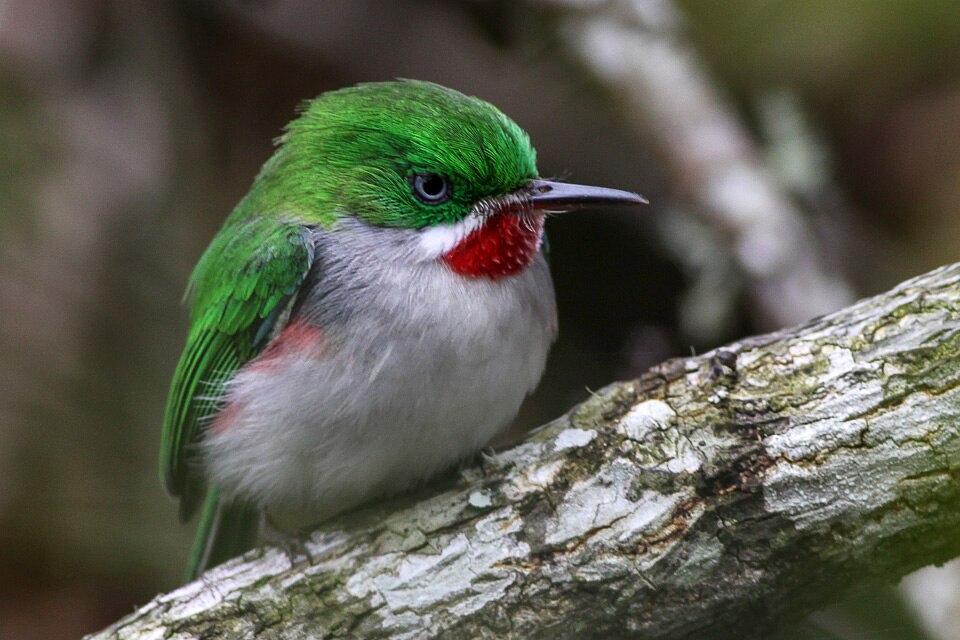
Broad-billed Tody - The Tiny Showstopper

This is the first bird most people fall in love with in Dominican rainforests.
Smaller than your fist. Emerald-green body. Enormous personality. It sits on low branches like it owns the forest - which, in a way, it does.
The Broad-billed Tody (Todus subulatus) is endemic to Hispaniola, found nowhere else on Earth. And unlike shy rainforest birds that hide in the canopy, Todies sit right at eye level, watching you back.
What makes them irresistible:
- Size: about 4 inches, weighing less than a AA battery
- Colors: bright green back, white chest with pink flanks, red throat
- Behavior: sits motionless, then explodes into flight to catch insects mid-air
- Sound: a rapid “toot-toot-toot” like a tiny machine gun
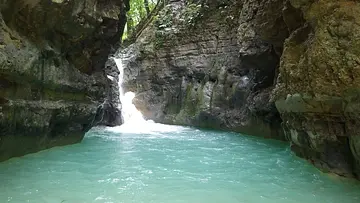
Where you’ll see them: the Damajagua waterfalls trails, on low branches near the river. They don’t hide - they perform. On the waterfalls trip, guides know exactly where Todies hang out, so look for movement at waist-to-head height.
That green is bright - like someone colored a bird with a highlighter. And they’re fearless, perching a few feet from people, unbothered. When you see your first Tody, you’ll reach for your phone. Everyone does.
Hummingbirds - Faster Than Your Eyes

Up on Mount Isabel de Torres, you’re there for the views, the Christ statue, and the botanical gardens. But between the flowers, watch for hummingbirds.
Three species you might catch:
- Vervain Hummingbird - one of the smallest birds on Earth, weighing less than a penny
- Antillean Mango - emerald green, with a curved bill
- Hispaniolan Emerald - endemic and iridescent
Spotting strategy: don’t watch the flowers, watch the air between them. Hummingbirds don’t perch for long - they hover a few seconds, feed, and vanish. Their wings beat 50-80 times per second, and that buzz is the sound.
Timing: early morning, before the clouds roll in around 10-11 AM. The summit’s botanical garden is planted for them, with hibiscus and tropical sage. This is why the Puerto Plata travel guide pushes an early start for the mountain. Views plus hummingbirds means a morning commitment.
Magnificent Frigatebird
Unmistakable: a massive black bird, wings bent like a W, hovering motionless above the ocean.

Frigatebirds don’t land on water - their feathers aren’t waterproof. Instead they steal food mid-air from other birds. Literal pirates. Males inflate red throat pouches like balloons during mating season. It looks absurd, and it works.
You’ll see them along the coast at Cofresí and Sosua, and during boat trips to Isla Bonita they’re constant overhead, riding wind currents with barely a flap.
Brown Pelican
Watch this: it flies low over the waves in formation, spots a fish, climbs, then cannonballs into the water and surfaces with the fish in its pouch.

Playa Dorada, Long Beach, following fishing boats for scraps. Early beach walks turn into pelican feeding frenzies, and the impact when they hit the water is ridiculous. On horseback rides at sunset, pelicans diving into the surf become part of the golden-hour show.
Royal Tern

White body, black cap, orange bill, and perpetually screeching. That screeching at the beach is royal terns fighting over fish. Puerto Plata’s Malecón, the Fort San Felipe area, any pier - and they’re not shy.
Turkey Vultures

Always circling because: they ride thermals - rising columns of hot air - so no flapping is needed. They circle, climb, and scan for food.
What they do: cleanup. Roadkill, carcasses, decomposition - ecosystems need vultures. On buggy adventures through the mountains, look up at the viewpoints and you’ll see them overhead, riding free lift. They’re not circling you, by the way.
Seasons Change What Flies
Winter brings migrants, spring means breeding, and the rainy season (May-November) brings insects, which draws insect-eaters into the forests. If nature matters to your trip, timing your visit changes what’s overhead.
Why This Matters
Puerto Plata isn’t just resort bubbles. It’s tropical forest, mountain ecosystems, and coastal habitat, and birds are everywhere.
That tiny green Tody watching you from a branch evolved nowhere else but here. The hummingbirds buzzing through mountain gardens are cloud-forest specialists. The frigatebirds soaring over boats are ocean masters that never touch water.
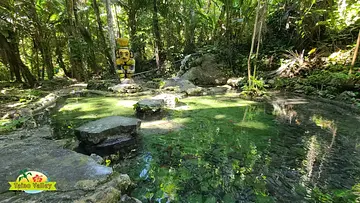
Wild birds aren’t locked in reserves. They’re part of every trail, beach, and mountain you’ll explore - no binoculars needed, just attention. If you want them closer and more concentrated, the tropical park at Taino Valley gathers native plants and wildlife in one walkable spot.
Two easy ways to put yourself where the birds are - the Damajagua trails (Tody country) and the tropical park at Taino Valley:
 −13%
−13%