

Dominican Republic Holidays

Dominican Republic Holidays: 2026 Calendar
The Dominican Republic has 12 official public holidays in 2026, a month-long carnival season, Semana Santa that rivals Christmas in importance, merengue festivals, and patron saint fiestas running in some town or another virtually every week. This is the full calendar - month by month, with dates, context, and what each holiday actually looks like on the ground.
If you’re visiting for the first time, knowing the holiday schedule helps you either catch something memorable or avoid the surprise of a closed bank and a jammed highway.
2026 Public Holidays at a Glance
| Date | Holiday | Type |
|---|---|---|
| Jan 1 | New Year’s Day | National |
| Jan 5 | Three Kings’ Day (moved from Jan 6) | National |
| Jan 21 | Our Lady of Altagracia | Religious |
| Jan 26 | Duarte Day | Patriotic |
| Feb 27 | Independence Day | Patriotic |
| Apr 3 | Good Friday | Religious |
| May 4 | Labor Day (moved from May 1) | National |
| Jun 4 | Corpus Christi | Religious |
| Aug 16 | Restoration Day | Patriotic |
| Sep 24 | Our Lady of Mercy | Religious |
| Nov 9 | Constitution Day (moved from Nov 6) | National |
| Dec 25 | Christmas | Religious |
Law 139-97 allows non-religious, non-patriotic holidays to shift to the nearest Monday, creating three-day weekends called “puentes.” Each year the Ministry of Labor publishes the official calendar with exact dates.
On long weekends, Santo Domingo empties. Highways clog, beach hotels fill up, and prices rise. Factor this into your booking plans.
January: Three Holidays in a Row
January 1 - New Year’s Day (Año Nuevo)
Dominicans ring in the new year with fireworks, street music, and family dinners. Traditions include wearing something new, opening all doors and windows at midnight to release evil spirits, and a deep clean of the house on December 31st. The table features roast pork, “ensalada rusa” (a Dominican take on potato salad), and “ponche” - local eggnog generously spiked with rum. More on Dominican holiday dishes in our food guide.
January 5 (moved from the 6th) - Three Kings’ Day (Día de los Reyes Magos)
The Dominican version of Epiphany. This is primarily a children’s holiday: Melchior, Caspar, and Balthazar bring gifts instead of Santa Claus. Kids leave grass and water under their beds for the Wise Men’s camels and find presents there in the morning. In San Pedro de Macorís, the Guloya Festival kicks off - a street celebration with drums, flutes, and elaborate costumes reflecting Afro-Caribbean heritage. The Guloya dance is recognized by UNESCO as a Masterpiece of Intangible Cultural Heritage.
January 21 - Our Lady of Altagracia (Nuestra Señora de la Altagracia)
The patron saint of the Dominican Republic. Thousands of pilgrims travel to the Basilica of Higüey (La Altagracia province) - the largest church in the country, designed by French architects in the 1970s. Inside hangs a 16th-century painting of the Virgen de la Altagracia. For devout Dominicans, this ranks among the most important dates of the year.
January 26 - Duarte Day (Día de Duarte)
Birthday of Juan Pablo Duarte (1813-1876), the foremost of the three founding fathers of the Dominican Republic. Along with Francisco del Rosario Sánchez and Ramón Matías Mella, he led the fight for independence from Haiti. Duarte holds a status in the Dominican imagination similar to what Bolívar represents for Venezuela: the embodiment of liberty and national identity.
February: Independence Day and Carnival
February 27 - Independence Day (Día de la Independencia)
The primary patriotic holiday. On February 27, 1844, the Dominican Republic declared independence from Haiti after 22 years of occupation. Santo Domingo hosts a military parade featuring the air force, navy, and army. For most Dominicans, though, this day marks the climax of carnival season.
Carnival (Carnaval Dominicano) - all of February
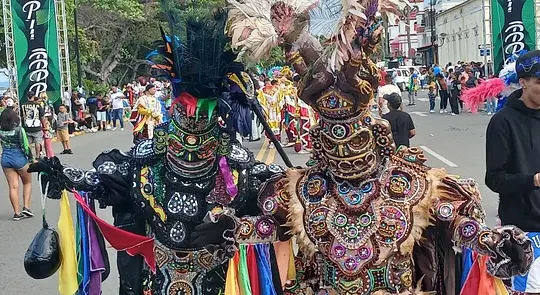
Carnival is not a single holiday but an entire month. Parades roll through different cities every Sunday in February, with the grand finale on the last Sunday of February or the first Sunday of March along the Malecón waterfront in Santo Domingo. The tradition dates back to 1510, making it one of the oldest carnivals in the Americas.
Each city has its own characters and customs:
- La Vega - home to what many consider the best carnival in the country. Devil masks called Diablo Cojuelo (“limping devil”) with horns and fangs are the city’s trademark. La Vega’s carnival is ranked among the top four in the world by UNESCO.
- Santiago - carnival figures here are called “lechones” (piglets). Masks feature long pig snouts and tall horns, with costumes covered in bells. Troupes are organized by neighborhood and cultural clubs.
- Puerto Plata - local characters called “Taimáscaros” blend three cultural streams: masks representing Taíno gods, Spanish blouses, and African handkerchiefs. For more on what Puerto Plata has to offer beyond carnival, see our North Coast guide.
- Santo Domingo - the final national parade gathers the best troupes from across the country.
- Punta Cana - a relatively young carnival (since 2008), organized by Grupo Puntacana, with free entry and live concerts.

The signature character across all Dominican carnivals is the Diablo Cojuelo. Legend says this devil was banished to earth for pranks and hurt his leg on impact. The mask satirizes the Spanish conquistadors who enslaved and whipped the indigenous population. Costumed “devils” chase spectators through the streets, swinging “vejigas” - inflated dried pig bladders.
Other traditional characters include “Roba la Gallina” (“chicken thief”) - a man dressed as a woman carrying a purse full of candy; “Los Indios” - groups in Taíno indigenous attire; and “Califé” - a political satirist in a top hat.
March-April: Semana Santa
Holy Week (Semana Santa)
For Dominicans, Semana Santa may well be more significant than Christmas. Good Friday (Viernes Santo) is a public holiday. In 2026, Easter falls on April 5, with Good Friday on April 3.
The entire week revolves around family. Cities empty as everyone travels to visit relatives, hit the beaches, or head to the rivers. Churches overflow. Religious processions with statues and crucifixes wind through the streets. In Santo Domingo, the central procession moves from the Church of Las Mercedes to the Cathedral of Santa María - the first cathedral in the Americas, located in the Colonial Zone.
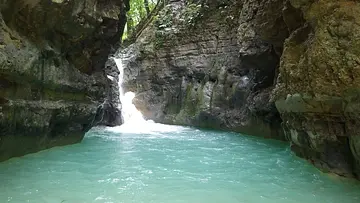
The rivers are the other half of Semana Santa, and the Damajagua waterfalls near Puerto Plata are the classic day out - hiking in, then sliding and jumping the cascades into natural pools.
A distinctive Santo Domingo tradition: flying kites (“chichiguas”) on Easter Saturday. The sky fills with paper and plastic kites - symbols of resurrection and ascension.
Food takes center stage. Meat is off the table on Good Friday, replaced by fish - especially “bacalao guisado con papa” (stewed salted cod with potatoes). But the real star of the season is “habichuelas con dulce”: a cold dessert made from red beans, coconut milk, cinnamon, cloves, and star anise, served with small round cookies marked with a cross. Families cook it in enormous pots and deliver bowls to neighbors - a gesture of Dominican hospitality. We cover this and other traditional dishes in our Dominican food guide.
In areas with large Haitian communities, “Gagá” ceremonies take place - ritual processions with African roots featuring drums, dancing, and elements of vodou.
Semana Santa is the busiest travel week of the year. Beaches see heavy security: military, Red Cross, civil defense. Water sports (yachts, jet skis, deep-sea fishing) may be restricted. For general safety tips as a visitor, we have a separate guide.
May
May 1 (moved to May 4 in 2026) - Labor Day (Día del Trabajo)
Standard workers’ holiday. In 2026 the official day off shifts to Monday May 4, creating a three-day weekend.
Last Sunday of May - Mother’s Day (Día de las Madres)
Not an official public holiday, but one of the most respected days in the Dominican calendar. Restaurants are packed, and flowers and gifts are non-negotiable.
June
June 4 - Corpus Christi
The Catholic Feast of the Body and Blood of Christ. Solemn church services with choirs, street processions with flower petals scattered on the path, and garlands decorating the route. The observance dates to a papal decree from 1264.
Third week of June - Puerto Plata Cultural Festival
Not a public holiday, but a notable North Coast event: handicraft exhibitions, traditional African dances, folk music, salsa, and merengue.
July
Last Sunday of July - Father’s Day (Día de los Padres)
Not a public holiday. Falls on July 26 in 2026.
Merengue Festival in Santo Domingo
Running since the 1960s, typically in late July through early August. For several days the capital becomes one vast dance floor. Merengue - the national dance and music of the Dominican Republic - was inscribed on the UNESCO Intangible Cultural Heritage list in 2016. It is danced in pairs to accordion, tambora (a two-headed drum), and güira (a metal scraper). November 26 is the official National Merengue Day, established by presidential decree in 2005.
August
August 16 - Restoration Day (Día de la Restauración)
The second most important patriotic holiday. On August 16, 1863, the War of Restoration began against Spanish annexation. After the brief independence from Haiti in 1844, the Dominican Republic fell under Spanish control in 1861. The restoration war lasted two years and ended in victory. Parades, concerts, and street parties mark the day.
Merengue and Caribbean Rhythms Festival
Held along the Malecón in Santo Domingo in August - a mix of reggaeton, merengue, bachata, and reggae.
September
September 24 - Our Lady of Mercy (Nuestra Señora de las Mercedes)
Patron saint and protector of the Dominican Republic. The earliest Spanish conquistadors built a church in her honor after their victories over the Taíno people. A religious holiday observed with church services and processions nationwide.
October
Puerto Plata Festival
A music festival in October held at Fort San Felipe - a 16th-century fortress on the North Coast. Folk, blues, jazz, and merengue under the open sky with ocean views. Local cuisine and beer served in tents along the waterfront. If you’re visiting during this period, there’s plenty more to do in Puerto Plata.
Sosúa-Cabarete Jazz Festival
Also in October. International and local jazz musicians perform on beachfront stages along the North Coast.
November
November 6 (moved to November 9 in 2026) - Constitution Day (Día de la Constitución)
Since 1844, the Dominican Republic has gone through 38 constitutions - more than any other country. Most, however, differed only in minor amendments. The current constitution dates from 2010. The holiday shifts to Monday, providing a long weekend.
December: Christmas and New Year
December 25 - Christmas (Navidad)
The main celebration happens not on the 25th but on December 24: “Noche Buena” (Holy Night). Families gather for Christmas dinner. Stars of the table include “puerco asado” (roast pork - a tradition with roots in Taíno culture, as the indigenous Taíno people invented the “barbacoa”), “pasteles en hoja” (meat filling wrapped in banana leaves), and “arroz con gandules” (rice with pigeon peas). For dessert - “ponche” with rum.
Christmas trees are decorated with glass beads, and leaves are painted white and green. Nearly every weekend from early December through Three Kings’ Day features “fiestas navideñas.”
December 31 - New Year’s Eve
Not an official public holiday, but universally celebrated. Traditions: deep-cleaning the house (to drive out evil spirits of the passing year), buying a new broom (which cannot be brought inside until January 1), wearing new clothes, and opening windows and doors at midnight. Then - dancing until sunrise.
Patron Saint Festivals (Fiestas Patronales)
Beyond national holidays, every town and village in the Dominican Republic celebrates the feast day of its patron saint. These can last from several days to a full week: religious processions in the morning, fairs and carnival rides during the day, live music and dancing until dawn. Catholic rituals blend with African traditions. Schedules vary by town, and virtually any week of the year, some community somewhere in the country is holding its local fiesta.
A few examples: San Felipe de Puerto Plata - May 1, Santiago - July 25 (Saint James’s Day), Higüey - January 21 (Altagracia), Santo Domingo - August 4.
What to Know Before You Go
Long weekends (“puentes”) - In 2026 there are seven three-day weekends: January 3-5, January 24-26, February 27 through March 1, April 3-5, May 2-4, November 7-9, December 25-27. Highways jam up, beachfront hotels fill, and prices rise.
Semana Santa - The busiest week of the year. Book accommodation well in advance. Alcohol sales face limitations on certain days, though enforcement in tourist zones tends to be relaxed.
February carnival - For the best carnival experience, head to La Vega on any Sunday in February. The final parade in Santo Domingo takes place on the last Sunday of February or the first of March. Entry is free. Watch out for “vejigas” - a smack from a dried pig bladder stings.
Banks and government offices - Closed on all public holidays. Shops and restaurants in tourist areas generally stay open.
North Coast festivals - Puerto Plata, Sosúa, and Cabarete come especially alive in June and October. Music festivals set against the backdrop of Fort San Felipe or right on the beach make a strong case for combining vacation with culture. The weather cooperates year-round, but October is particularly pleasant on the North Coast. If a festival brings you to Puerto Plata, the city tour ties the fort, the amber museum, and the old town into one easy day.
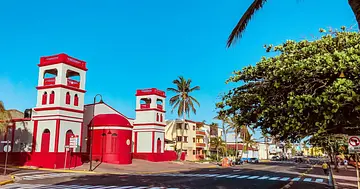
Between holidays, explore the underwater world off the Atlantic coast or plan your day around an Amber Cove port call.
Traveling with family - Many Dominican holidays are family-centered events. Carnival, Semana Santa, and Christmas all work well with kids. We put together a separate guide on visiting the Dominican Republic with children.
To plan your trip around both weather patterns and the festival calendar, check our guide on the best time to visit.
Month by Month Summary
There is no dull month in the Dominican Republic. January opens with the Guloya Festival and pilgrimages to the Basilica of Altagracia. February belongs to carnival and independence. Spring brings Semana Santa with its processions, kites, and habichuelas con dulce. Summer means merengue festivals and Restoration Day. Autumn delivers music on the North Coast. Winter wraps up with Christmas traditions featuring roast pork and rum-spiked eggnog.
Visit any time of year - some celebration is always underway.